
Dear Readers,
I have now posted all 21 video lectures of the GeoCurrents series on the Historical Geography of Natural Psychoactive Substances, which can be found here. Each lecture is illustrated with maps, diagrams, photographs, and so on. Most are roughly one hour in length.
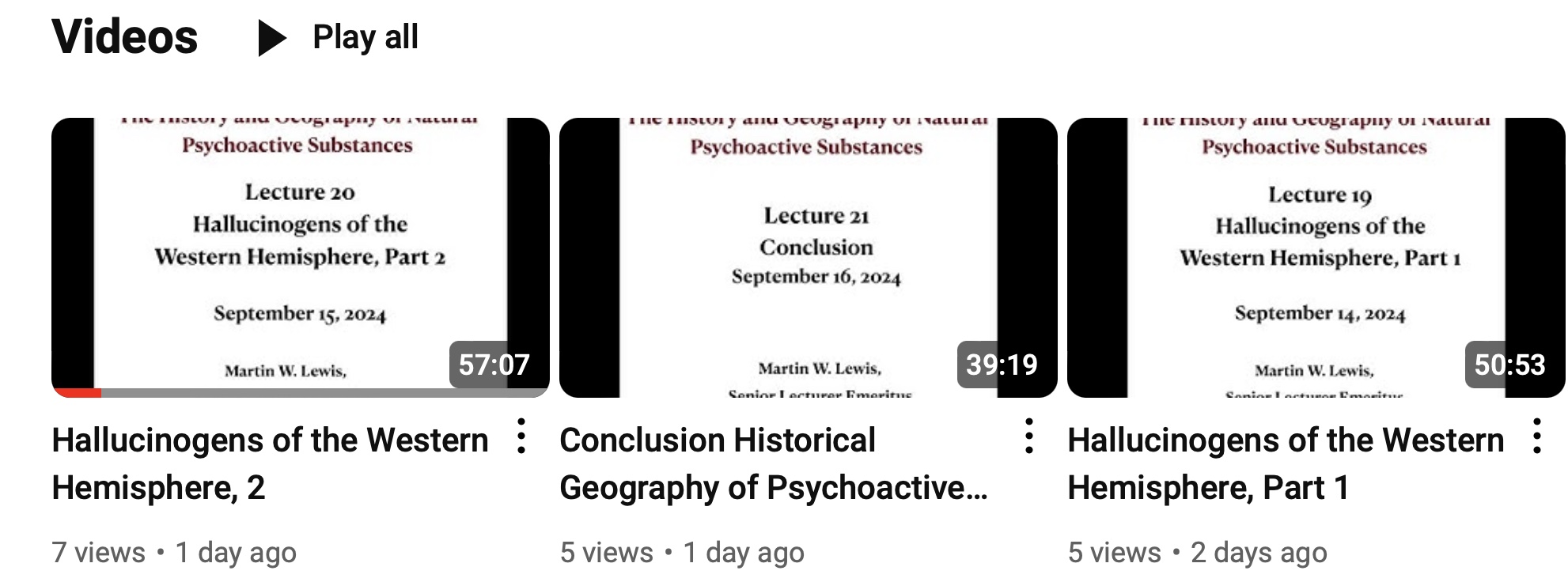
The series begins with an introductory lecture and then moves on two episodes on alcohol. Attention is then turned to stimulants. This part of the series begins with two lectures on caffeine plants, one on coffee and one on tea. The other important caffeine plants, yerba mate, cola, and yaupon, are briefly discussed (yaupon, or Ilex vomitoria [the vomit-inducing holly?] is especially interesting). Tobacco follows, with two lectures. Betel (Areca), a substance with somewhat similar effects to those of tobacco, comes next. Attention then turns to coca, along with its main active component, cocaine. A discussion of khat (Catha edulis) concludes the section of the series devoted to stimulants.
Two important psychoactive plants usually classified as depressants are then examined: opium and kava. Two lectures are devoted to opium, including a discussion of its main psychoactive component, morphine. Heroin, a derivative of morphine, is given brief consideration, as are synthetic opioids.
Cannabis (marijuana), a substance that is difficult to classify, is next in line. Due to its growing importance – as well as my own personal interest – cannabis is covered in three separate lectures.
Four lectures on hallucinogens, divided into two sections, round out the series. The first two lectures look at the hallucinogens of Eurasia, while the second two turn to those of the Americas. Lecture 17 examines the mushroom Amanita muscaria (fly agaric) and then turns to ancient and medicinal uses of the so-called deliriants (henbane, nightshade, & mandrake). Lecture 18 first looks at the use of the fungus ergot in the ancient world and then turns to the possible use of deliriants in medieval witchcraft as well as their consumption by modern-day “psychonauts.” Lecture 19 examines datura, peyote, psilocybin, and morning glory, while Lecture 20 turns to Salvia divinorum and ayahuasca. This penultimate lecture concludes with an examination of the main active component of ayahuasca, DMT, as well as its sibling drug, 5-MeO-DMT.
The final lecture (# 21) begins with brief discussion of two additional psychoactive plants: Iboga (which contains Ibogaine) and Blue Lotus (which was evidently important in ancient Egypt). Both deserve a full lecture, but I unfortunately ran out of time. The rest of episode 21 draws out general lessons from the entire series and concludes with a brief discussion of the how personality type influences psychoactive drug use. The final slide advises people interested in consuming such drugs to follow the two most important maxims inscribed on the Temple of Delphi in ancient Greece: Know Thyself and Nothing in Excess.