(This is the eighth post in a series aimed at helping parents home-school their children.)
Now that we have gone through the preliminary materials on basic global geography, it is time to take up a much larger issue: seasons and climate. As this is a complex topic, quite a few posts will be necessary to cover it adequately.
I like to begin teaching about seasons by asking students how winter and summer differ. This might seem like the simplest question imaginable, but the answers will probably vary depending on where the students live. Growing up in northern California, with its warm, rainless summers and cool, rainy winters, my answer as a six-year-old would have focused as much on precipitation as on temperature. I still remember learning about summer rain, which happened when I began following baseball and encountered rain delays. “How could it rain in the summer?” I asked my father. “If it’s raining,” I continued, “that means it’s cold, and if it’s cold, that means it’s not summer.” It took a while to wrap my head around the possibility of rain on a warm day.
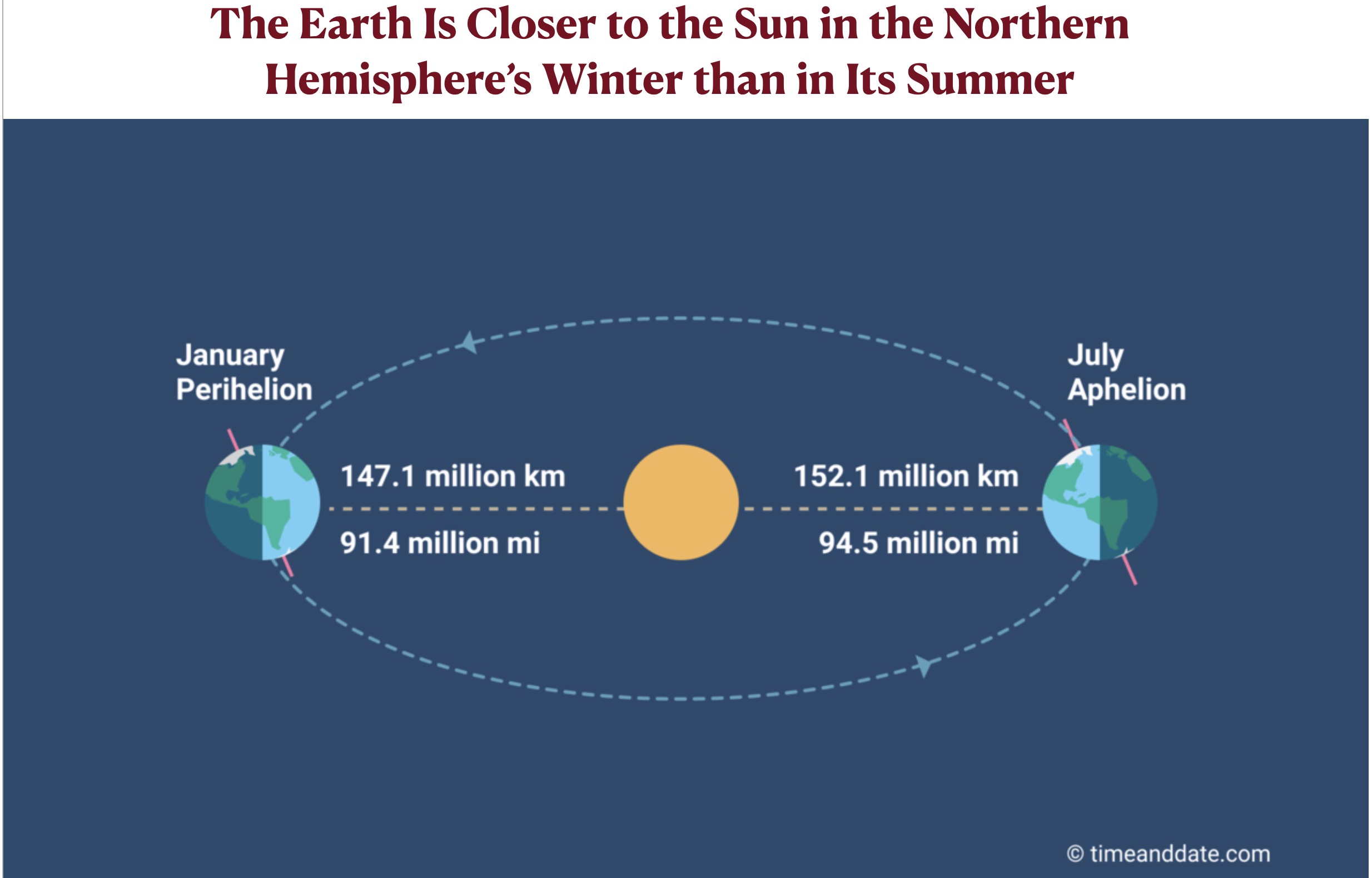
Asking this question in Bozeman, Montana, where I now teach children, is more likely to elicit my desired response, one focused on temperature rather than precipitation. Bozeman’s continental location heightens this distinction, with a record high temperature of 105° F (41° C) and a record low of -46° F (-43° C). The simple follow-up question – why is summer warm and winter cold? – is more challenging, even for most adults. Students might respond by noting that the sun rises much earlier and sets much later in the summer than in the winter, but that is a small part of the answer. At the North Pole, the sun does not set at all from March 20 until September 22, yet it remains very cold the entire time. The next step is to inform the class that the Earth is much closer to the sun – by around three million miles – in one of these seasons than in the other. But which one? It is their turn to be dumbfounded when I tell them that the Earth reaches its closest distance to the sun on January 3 and its farthest on July 4.
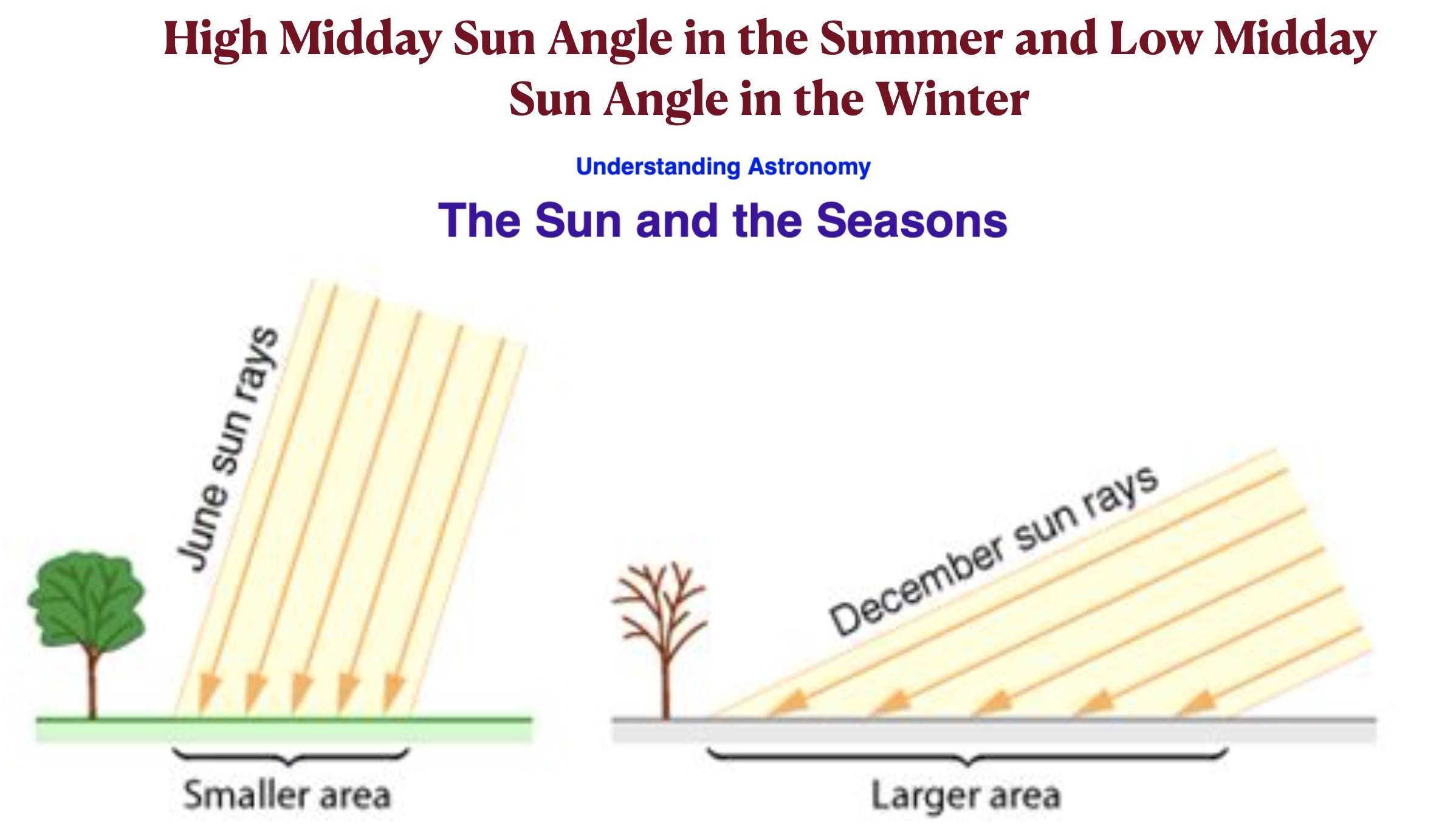
Few students, and even relatively few adults, know the main reason why summer is warm and winter is cold in a midlatitude location like Bozeman. The key factor is the angle of the sun. Put simply, the midday sun is much higher in the sky during the summer than in the winter, and as result provides much more warming solar radiation. The rest of this post shows why high sun angles deliver more warmth than low sun angle. The changing angle of the sun over the course of a year will be explained in subsequent posts.
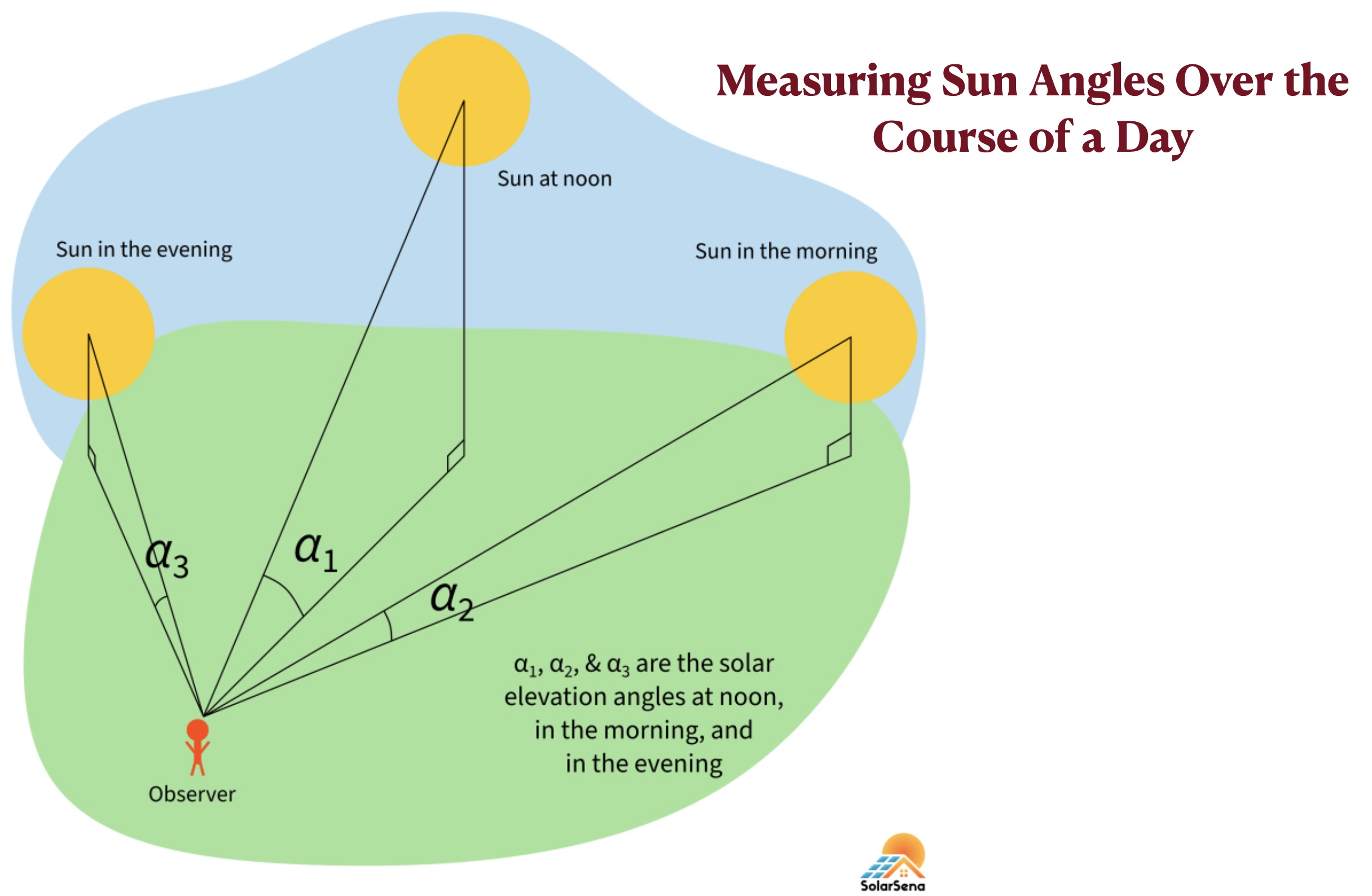
The role of sun angles in determining how much solar radiation reaches the Earth’s surface in different places and at different times of the day and year is a complicated issue. Mostly, however, it is a matter of basic geometry. When the sun is low in the sky, its rays spread horizontally through the atmosphere, mostly bypassing the earth’s surface. At sunrise and sunset, when solar radiation is at a minimum, you can even glance at the sun without hurting your eyes. But the higher it rises, the more directly its rays hit the earth, increasing their intensity. Solar radiation reaches its maximum when the sun is directly overhead, which only occurs in the tropics. As this is largely a matter of basic geometry, it can be most easily demonstrated with simple diagrams.

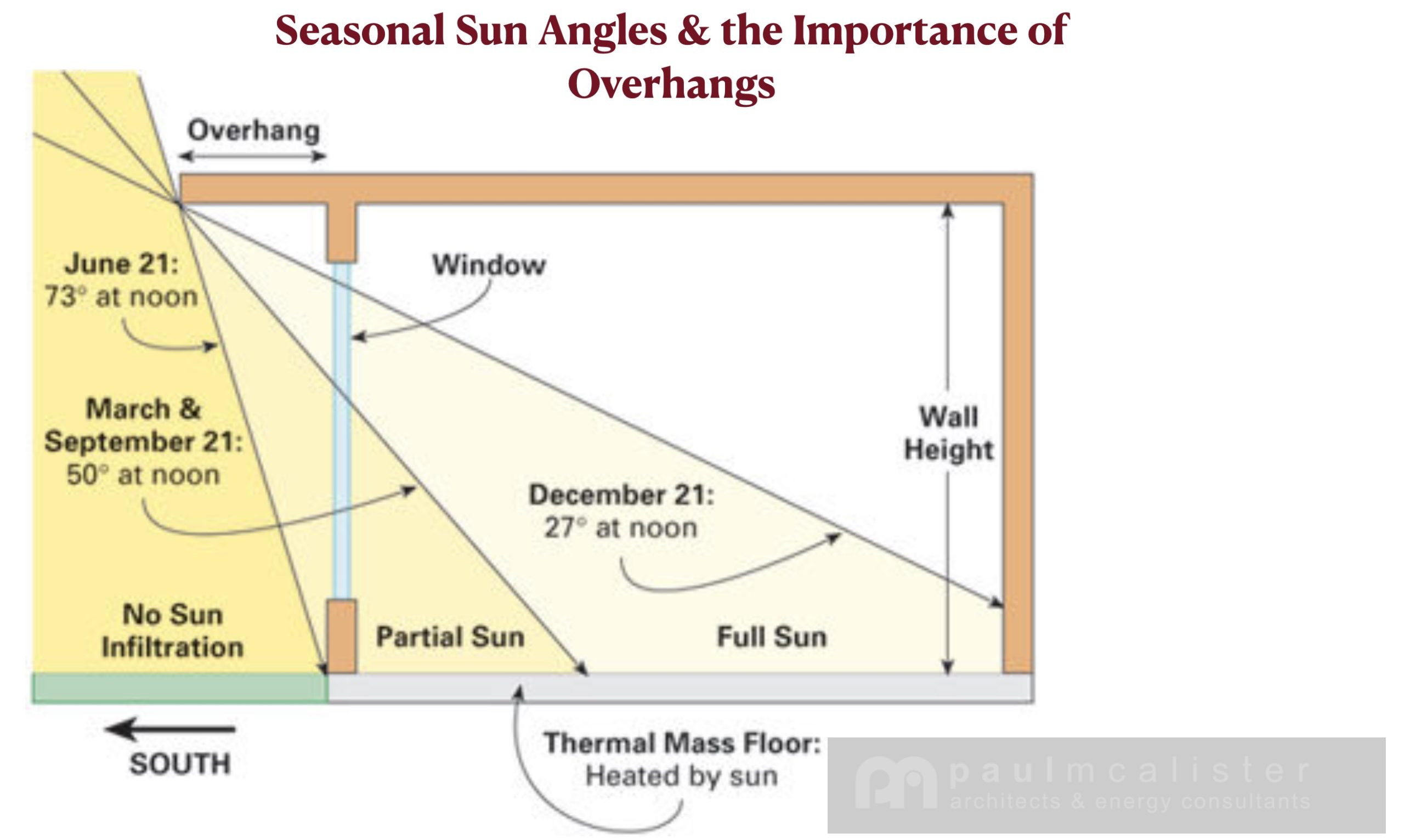
Understanding the significance of sun angles has many practical applications. It lets you know, for example, why it is much more important to use sunscreen in the middle of the day than in the early morning or late afternoon. Architects need to take sun angles into account when they design buildings. A window on the south side of a house, for example, can be useful in the winter to let in warming sunlight but undesirable in the summer when extra warmth is not wanted. But since the midday sun is much higher in the sky during the summer than in the winter, an overhanging roof can keep the window shaded in the warm season and unshaded in the cold season.