As the previous post explained, seasonal temperature changes are mostly caused by changes in the midday sun angle. By why does the height of the sun above the horizon vary at different times of the year? The key factor here is the Earth’s tilted axis, which changes in orientation relative to the sun as the Earth completes its annual orbit. This topic was briefly explored in the October 21, 2025 GeoCurrents post called “Explaining the Tilt of the Earth’s Axis and Its Importance.” It is now time to examine in more detail the relationship between midday sun angles and changing seasons.
This lesson briefly covers seasonally changing sun angles at the Equator, the poles, the tropics of Cancer and Capricorn, and Bozeman, Montana, which is conveniently located almost exactly halfway between the Equator and the North Pole. As was previously explained, this task is most easily accomplished by a physical demonstration with a globe and a flashlight in dark room. Sun-angle diagrams are also included in this post to help students understand these geometrical relationships. Forthcoming posts will consider the Arctic and Antarctic circles and will show how sun angles are calculated based on latitude and time of the year.
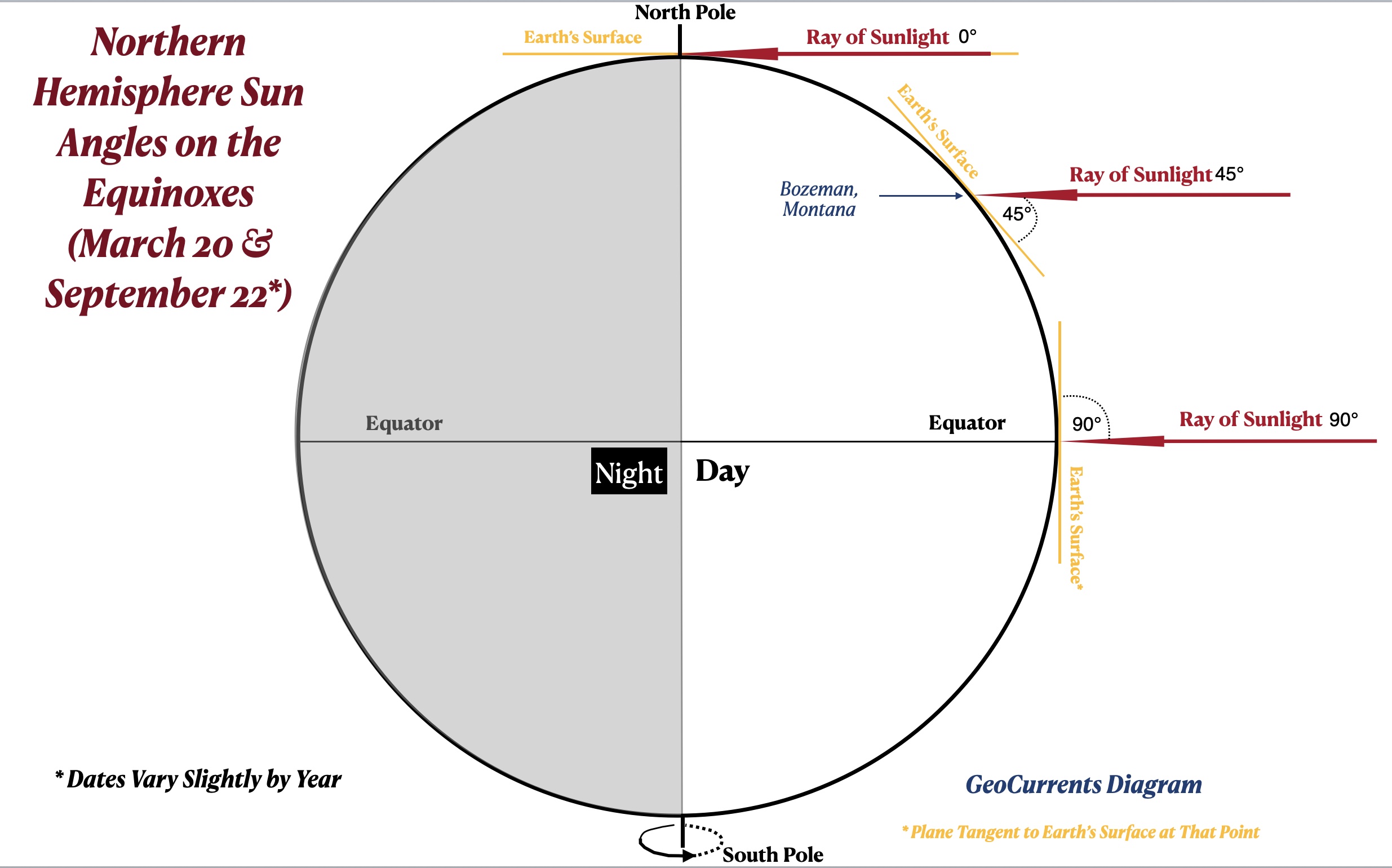
As before, begin by holding a globe and asking a student in the center of the room to point a flashlight toward it. Orient the globe so that the top of its axis is on your lefthand side, neither pointing toward nor away from the light. This position represents the spring equinox, which occurs around March 20. Make sure that the flashlight and the globe are at the same level. Next, imagine a ray of light coming from the sun, represented by the flashlight, and hitting the Earth’s (globe’s) surface. A pencil held parallel to the floor can represent such a ray. If the pencil is carried from the flashlight to the globe’s Equator, it should hit it straight on, forming a 90° angle with the surface of the sphere at that point [1]. That means that the sun is directly overhead at noon on the Equator on the spring equinox. But what happens when the pencil, held in a slightly higher position but still parallel to the floor, hits Bozeman? In this case, it will touch the globe’s surface at a 45° angle. That means that on the spring equinox in Bozeman, the noon sun angle is 45°. In other words, it is halfway between the horizon and the position directly above the Earth’s surface at that point, which is called the zenith. Finally, consider the situation at the North Pole. There the pencil will just glancingly touch come into contact with the globe, meaning that the sun angle will be 0°. In other words, at the North Pole on the Spring Equinox the sun will be just at the horizon.
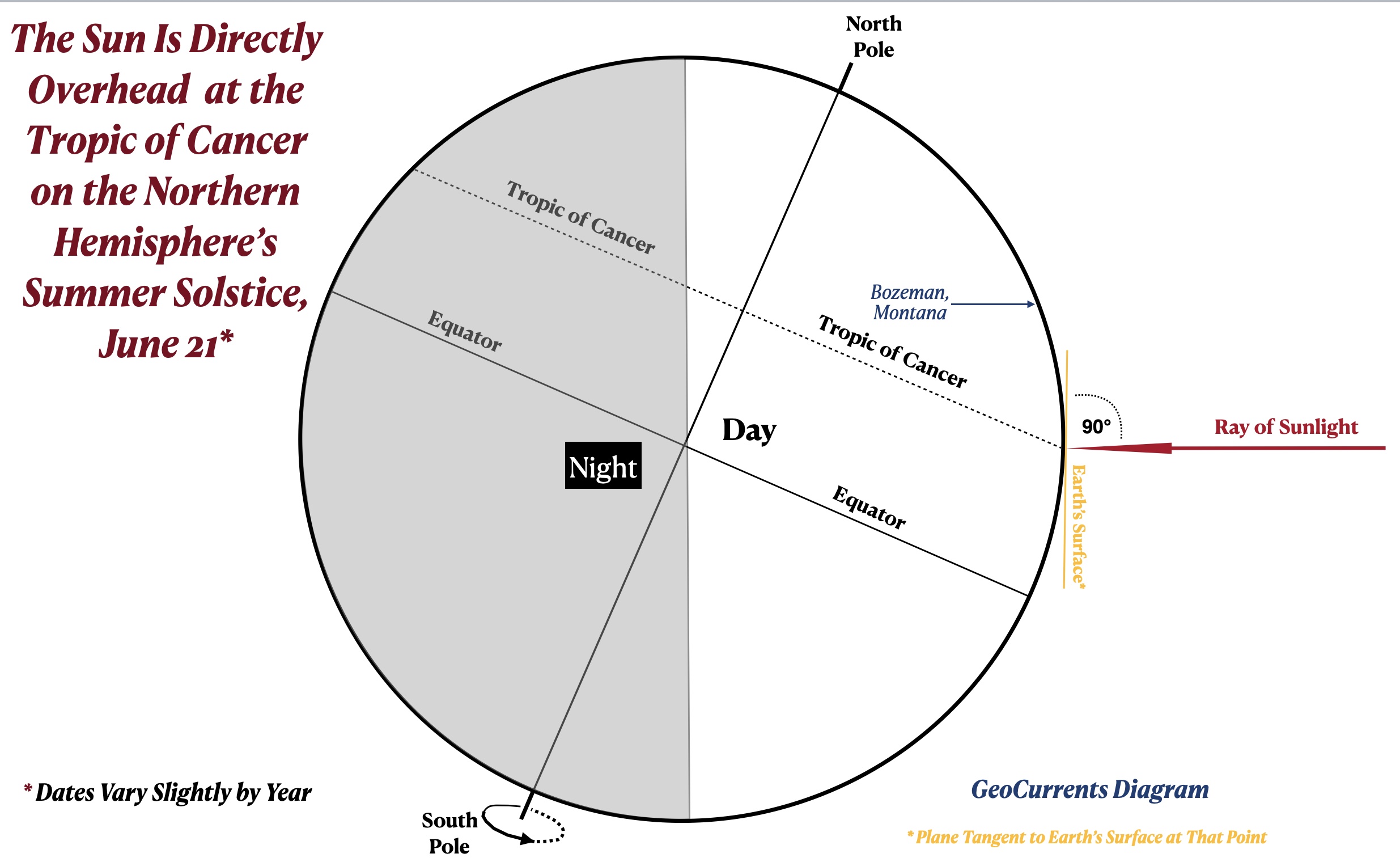
The next step, as before, is to walk slowly to your right in a curved line, remaining the same distance from the light. Make sure not to twist the base of the globe as you do so. Stop when you have gone one quarter the way around the student holding the flashlight. At this point, the top of the earth’s axis will be oriented toward the light, representing the summer solstice in the Northern Hemisphere, June 20 or 21. It is also the winter solstice in the Southern Hemisphere, with the South Pole oriented away from the light.
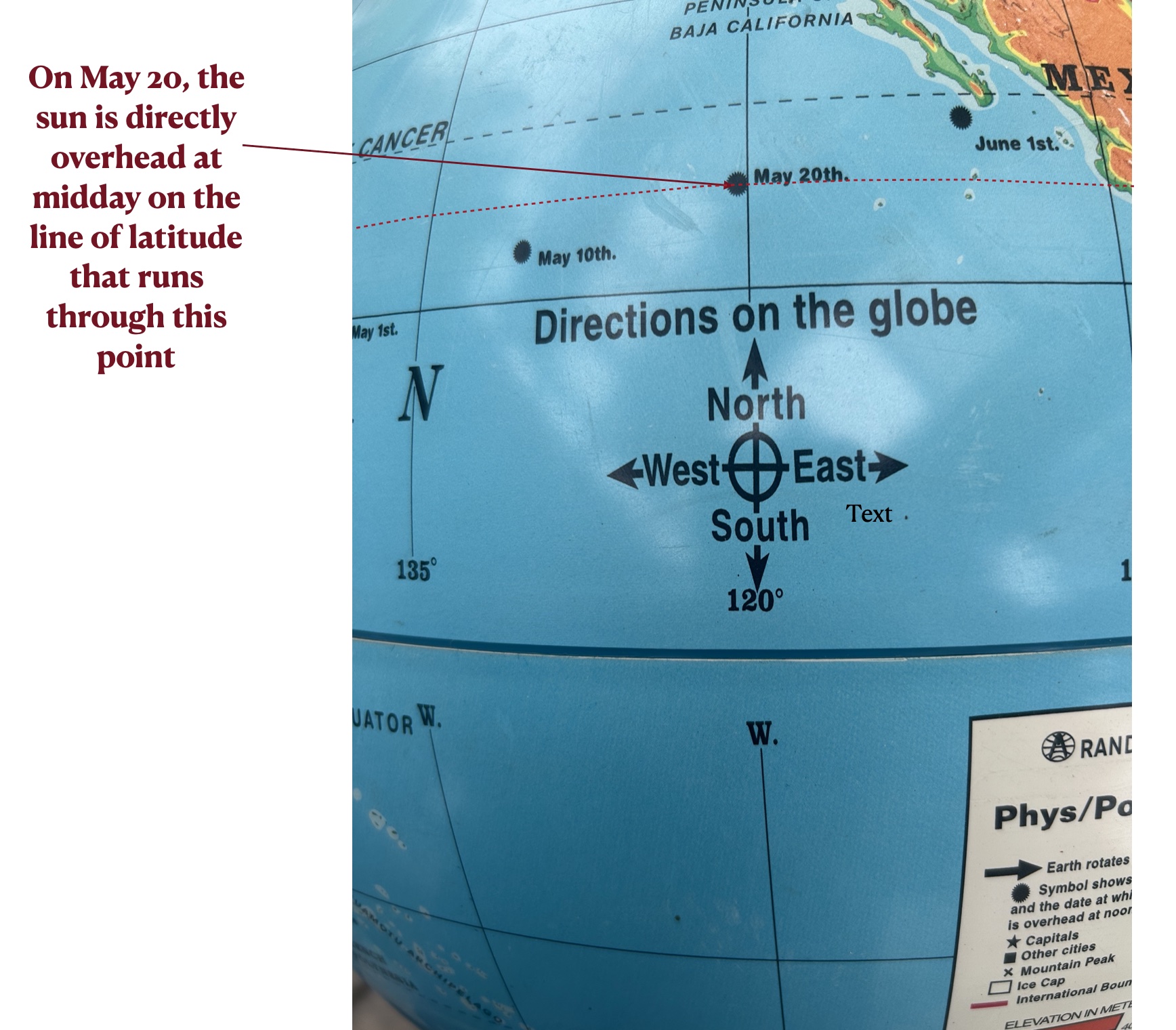
At this summer solstice position, students should be able to see that a ray of light will now hit the globe at a 90° angle not at the Equator but well to its north. It does so at an imaginary line called the Tropic of Cancer [2], which circles the Earth at this position and should be indicated on your globe. Again, you can demonstrate this point by bringing a pencil held parallel to the floor into contact with this line. The Tropic of Cancer marks the northmost limit at which the sun is ever directly overhead. You can also show how the 90° midday sun angle gradually moves north from March 20 to June 21. This can be done by returning the starting position at the equinox, and then slowly walking back to the solstice position while keeping the pencil at a 90° angle to the globe. Many globes have labeled dots to indicate the line of latitude at which the midday sun reaches the zenith at different dates.
The next step is to consider the midday sun angle at several other locations, as shown on the figure posted below. At the Equator, the sun is 66.5° above the horizon, which is still a high angle that provides a lot of warming energy. But at Bozeman the sun is a little higher than that – 68.5° – and thus provides slightly more radiation. It is therefore hardly surprising that Bozeman has warm summers.

Although the summer solstice is the time of maximum solar radiation at the Tropic of Cancer and all places to its north, it not generally warmest time of the year in the Northern Hemisphere. For example, in Bozeman the average high temperature on June 21 is in the mid 70s (°F), but by the middle of July it reaches the low 80s (°F). This delay occurs because it takes time for land, and a lot of time for water, to absorb solar radiation and become warmer. Because most of the world is covered by the sea, the warmest time of the year in most midlatitude areas is roughly a month after the period of peak solar radiation. For the same reason, the coldest time of the year is usually around a month after the winter solstice, when solar radiation is slowly increasing.
The North Pole is another interesting and important place to examine at the summer solstice. Here the sun angle is 23.5°, which is relatively low and does not provide much warming radiation. If you rotate the globe, however, you will see that the pole remains in the light the entire time, with its sun angle remaining constant. At the North Pole on the summer solstice, the sun appears to circle the Earth over the course of a day, remaining 23.5° above the horizon. Because of the constant radiation that it provides, it might seem odd that the northern polar region remains so cold, with its temperature in late June typically hovering around 32° F (0° C), the freezing point of water. Later lessons will provide additional reasons why the North Pole remain cold even when it is bathed in constant sunlight.
The next step is to return to the globe’s (earth’s) journey around the light (sun). When you have walked another quarter way around the flashlight, you will have reached the fall equinox position, with the top of the globe’s axis pointing sideways relative to the sun. Conditions now are essentially the same as they were on the spring equinox. The sun will be directly overhead at the equator at noon, and at both poles it will appear to circle the earth at the horizon. Because the earth and sun stand in the same relationship at the two equinoxes, students might wonder why the weather in Bozeman in late September is almost always warmer than it is in late March. The answer is, yet again, the lag factor; it takes time to warm up in the spring and time to cool down in the fall.
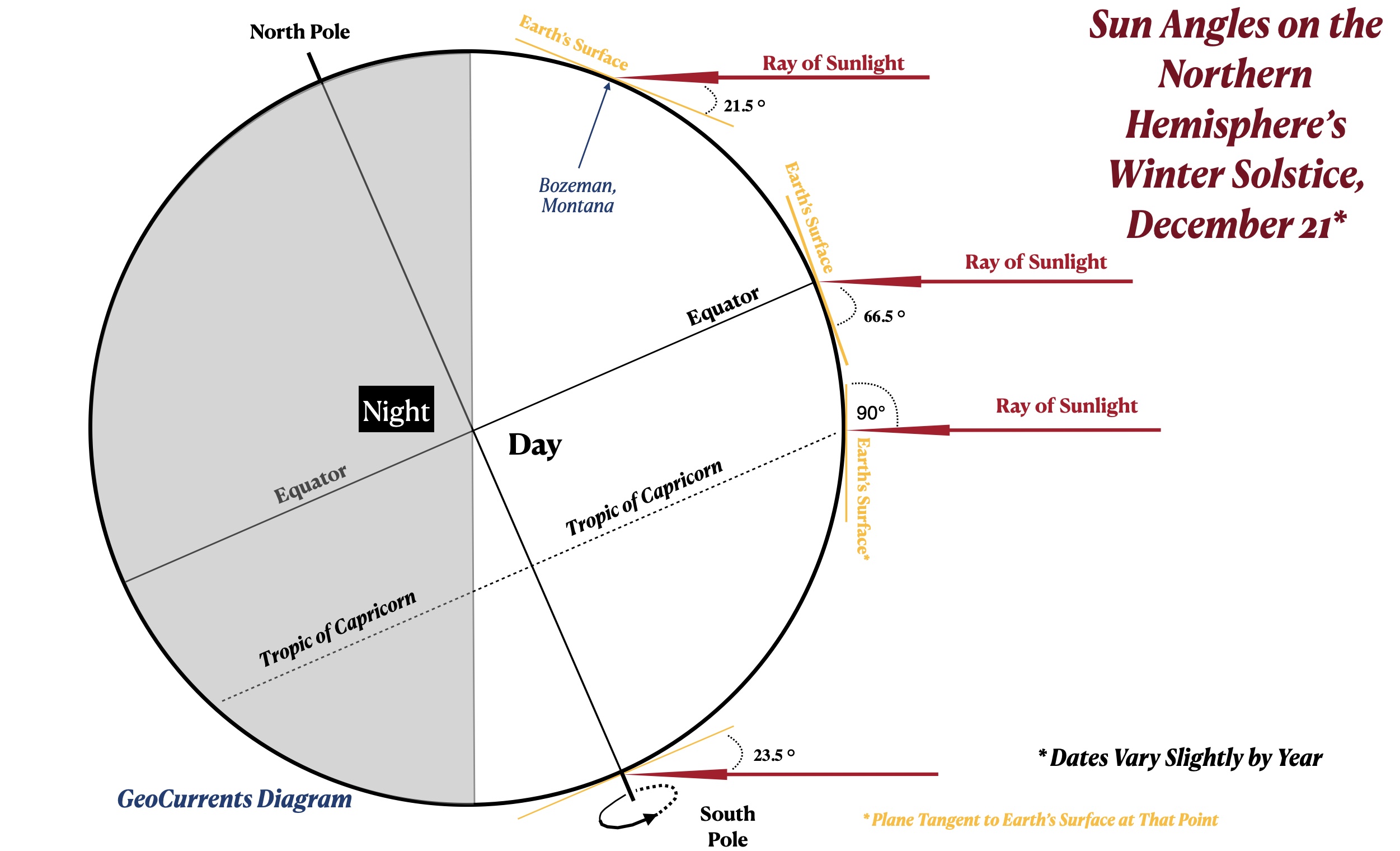
The next stage takes you to the position in which the South Pole is oriented toward the sun, which is around December 21. This date marks the Northern Hemisphere’s winter solstice and the Southern Hemisphere’s summer solstice. The situation now is the opposite of what it was on June 21. The sun is directly overhead at noon on the Tropic of Capricorn in the Southern Hemisphere, while the South Pole experiences constant light with the sun remaining at a 23.5° angle above the horizon all day. As the graph below shows, the sun angle is Bozeman at this time of the year, 23.5°, is a little lower. It is thus hardly surprising that Bozeman has cold winters.
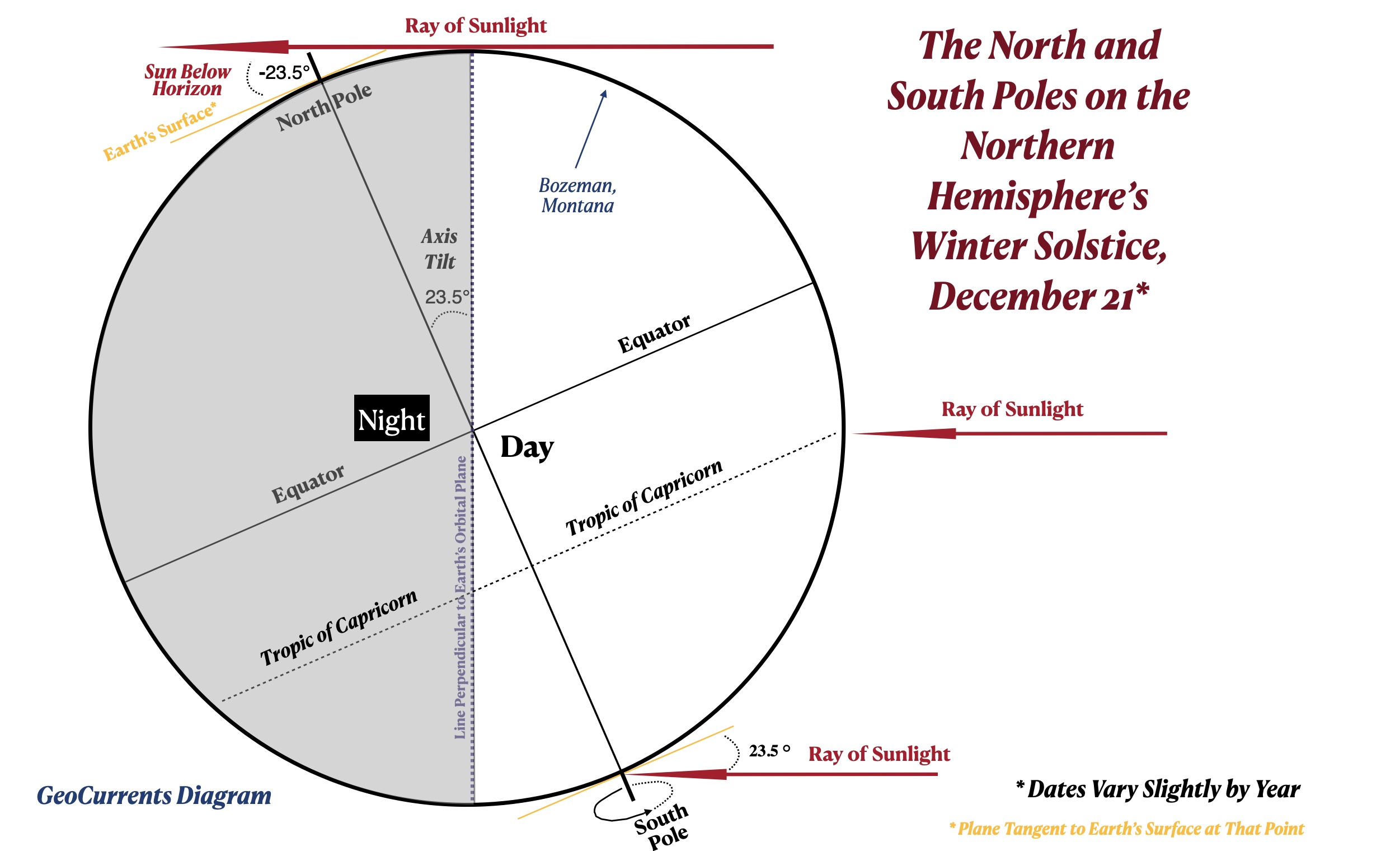
It is also necessary to consider the situation at the North Pole on the Northern Hemisphere’s winter solstice, which is identical to that of the South Pole on the Northern Hemisphere’s summer solstice. If you rotate the globe while it is in this position, you will see that North Pole remain in the dark the entire time, receiving no sunlight. As the diagram below shows, the sun remains 23.5° below the horizon on the winter solstice, which means that it is as dark as it can be all 24 hours of the day. It is not coincidental that this angle is the same as the angle of the sun above the horizon at the South Pole, or that it is the same as the angle of the tilt of the axis. These relationships will be explained in the next few posts.
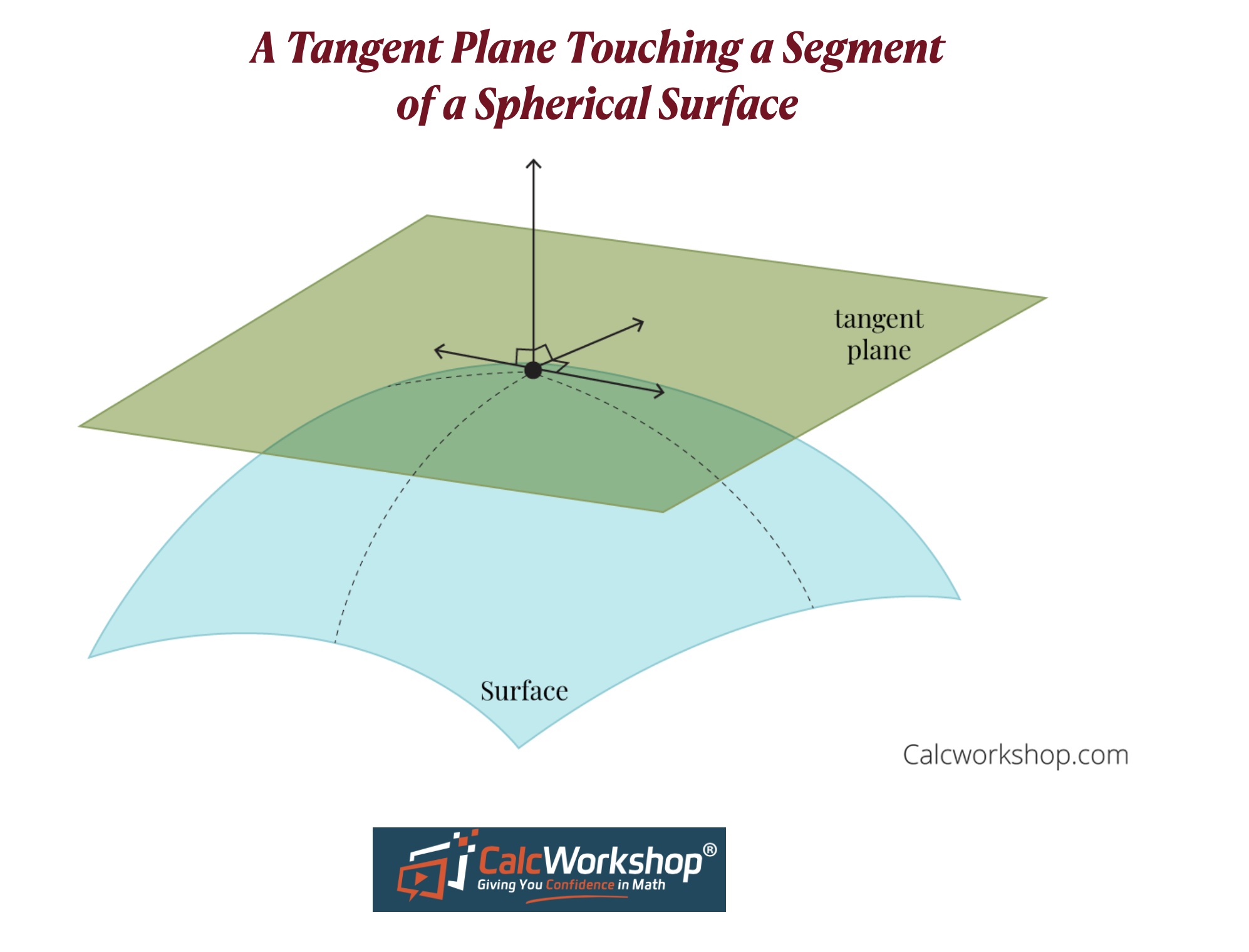
[1]. Technically, it forms a 90° angle with a tangent plane that just touches the globe at that point.
[2]. You might want to mention that “cancer” refers to the crab constellation, as “cancer” means “crab” in Latin