
(This is the sixth post in a series aimed at helping parents home-school their children. It is, however, misplaced in the sequence, as it should come immediately after the post on the rotation of the Earth. Once all the posts have been published on this site, they will be rearranged in the correct order.)
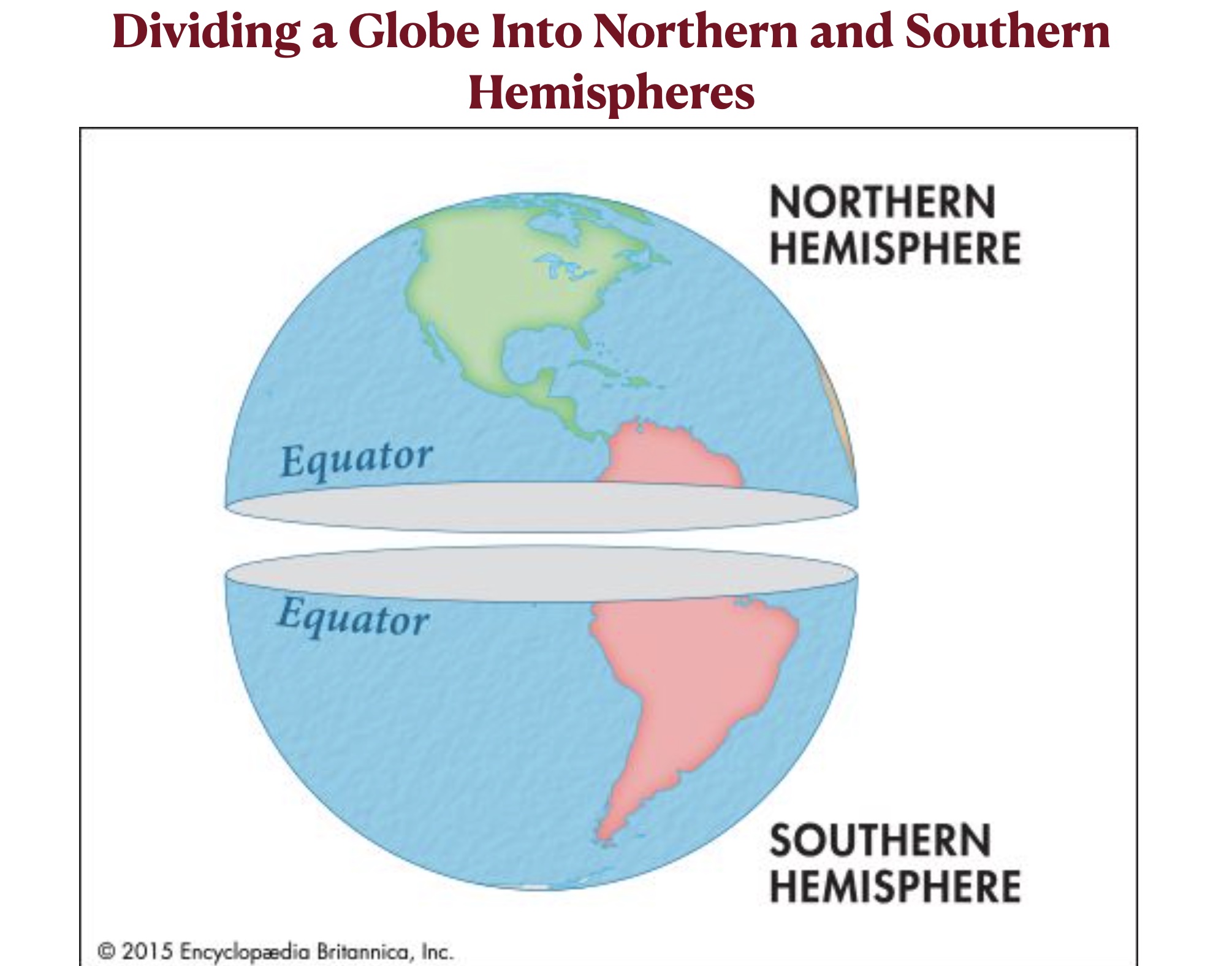
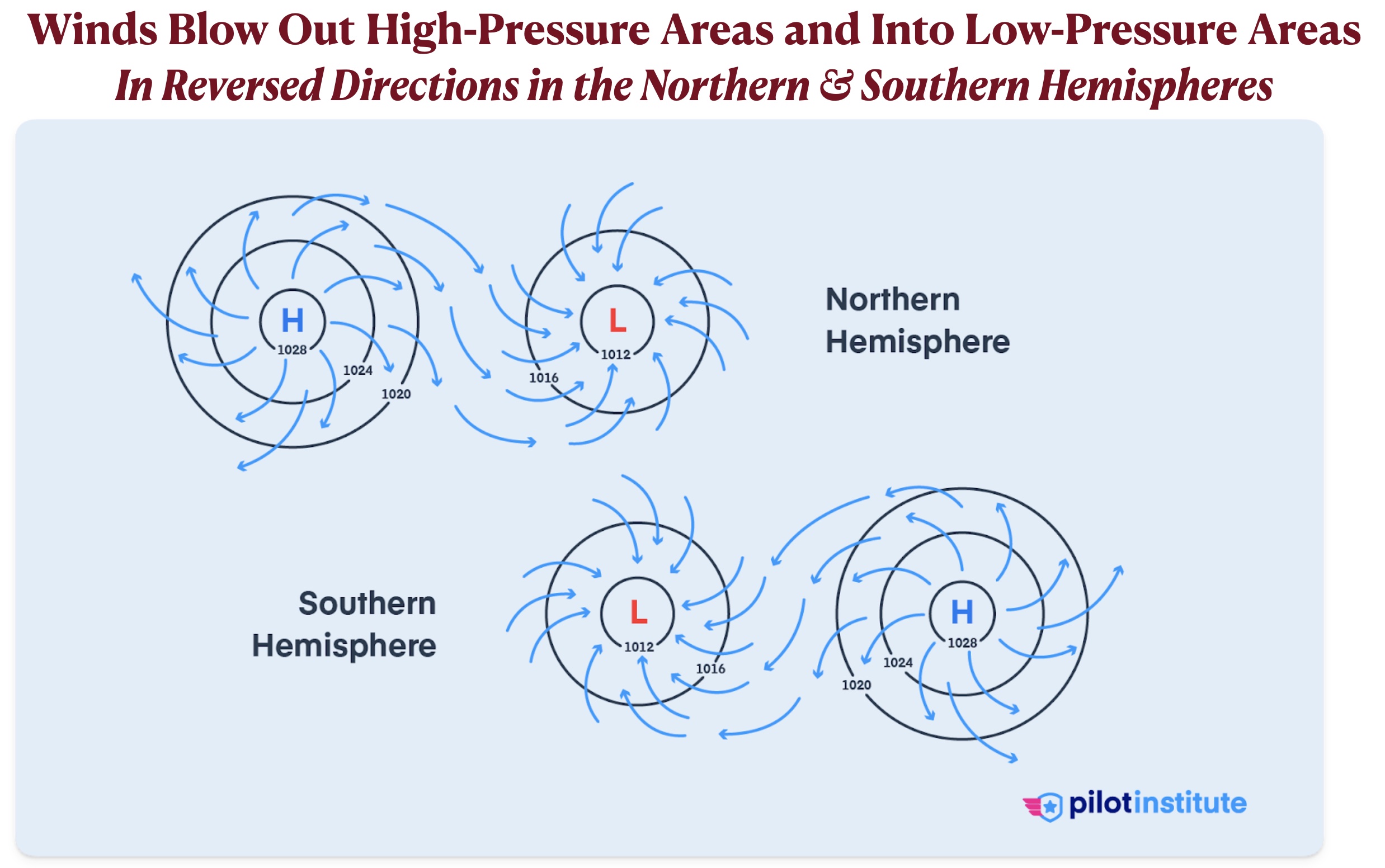
Once the equator has been explained, the concept of the hemisphere can be introduced. You can begin by asking students to imagine what they would get if they sliced a globe in half along the Equator. The result would be two half-spheres of the same size and shape, the Northern Hemisphere and the Southern Hemisphere. These two hemispheres form mirror images of each other. As we will see in later lessons, they have the same climate zones but with the directions reversed; in the Northern Hemisphere, south points to the warm equator while north points to the frigid North Pole, whereas in the Southern Hemisphere north points to the warm equator while south points to the super-frigid South Pole. Their seasons are reversed as well, with the Southern Hemisphere’s winter being the Northern Hemisphere’s summer. Air masses and water currents rotate in opposite directions. Winds, for example, blow out of areas of high air-pressure in a clockwise direction in the northern Hemisphere and in a counterclockwise direction in the Southern Hemisphere.
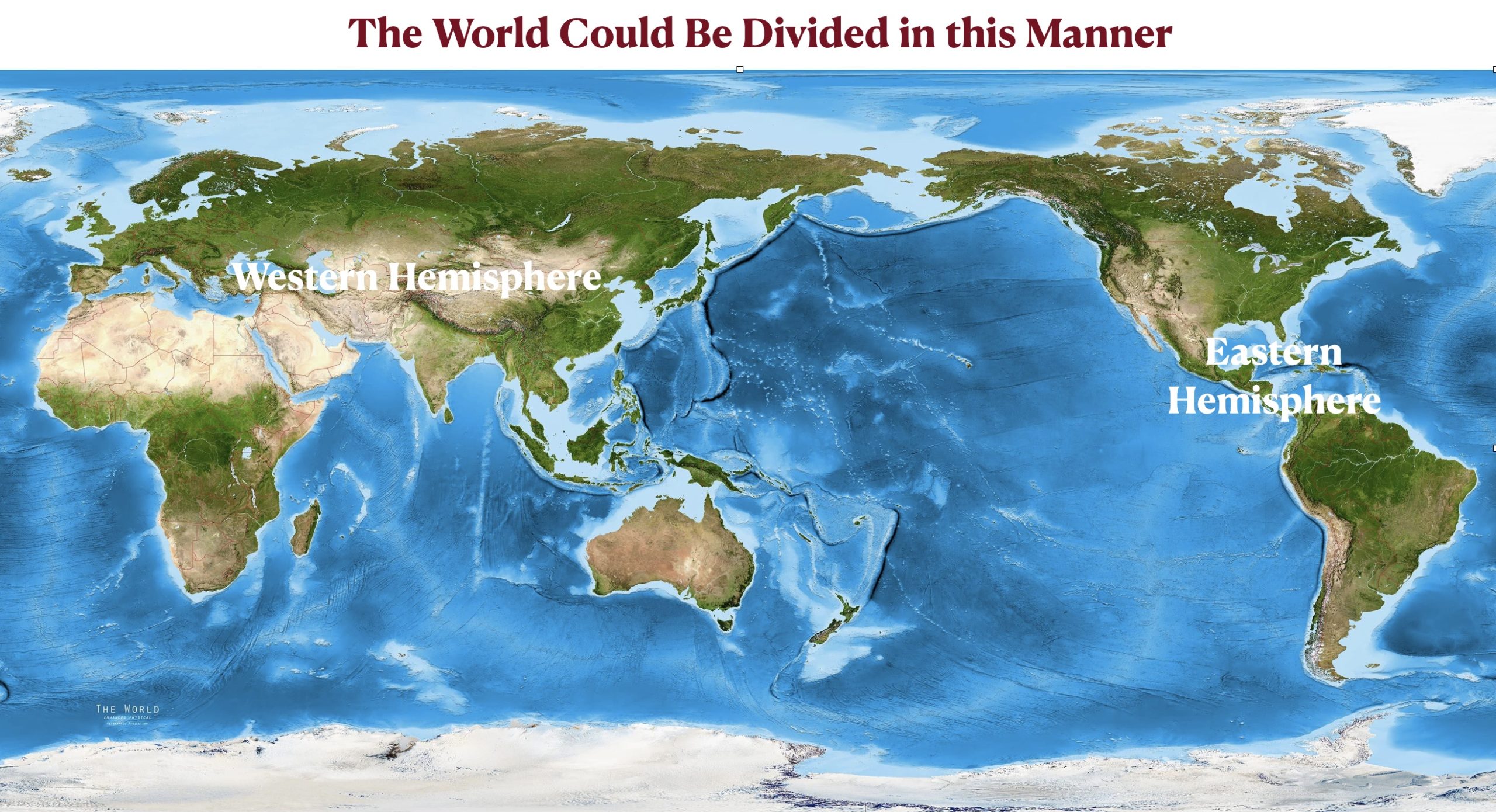
Different kinds of hemisphere can be created by slicing through the diameter of a globe at different places. Provided that the cut passes through the center, two hemispheres of equal size will result. But no other half-globes are at all like the northern and southern hemispheres. The hemispheres of day and night [1], for example, are also natural division of the world, but they constantly shift as the Earth rotates around its axis and orbits the sun. Most other hemispheres are based merely on a decision to split the world is a particular way. The eastern and western hemispheres, for example, are important divisions of the world, but they are essentially arbitrary creations that cannot be defined on a natural basis.

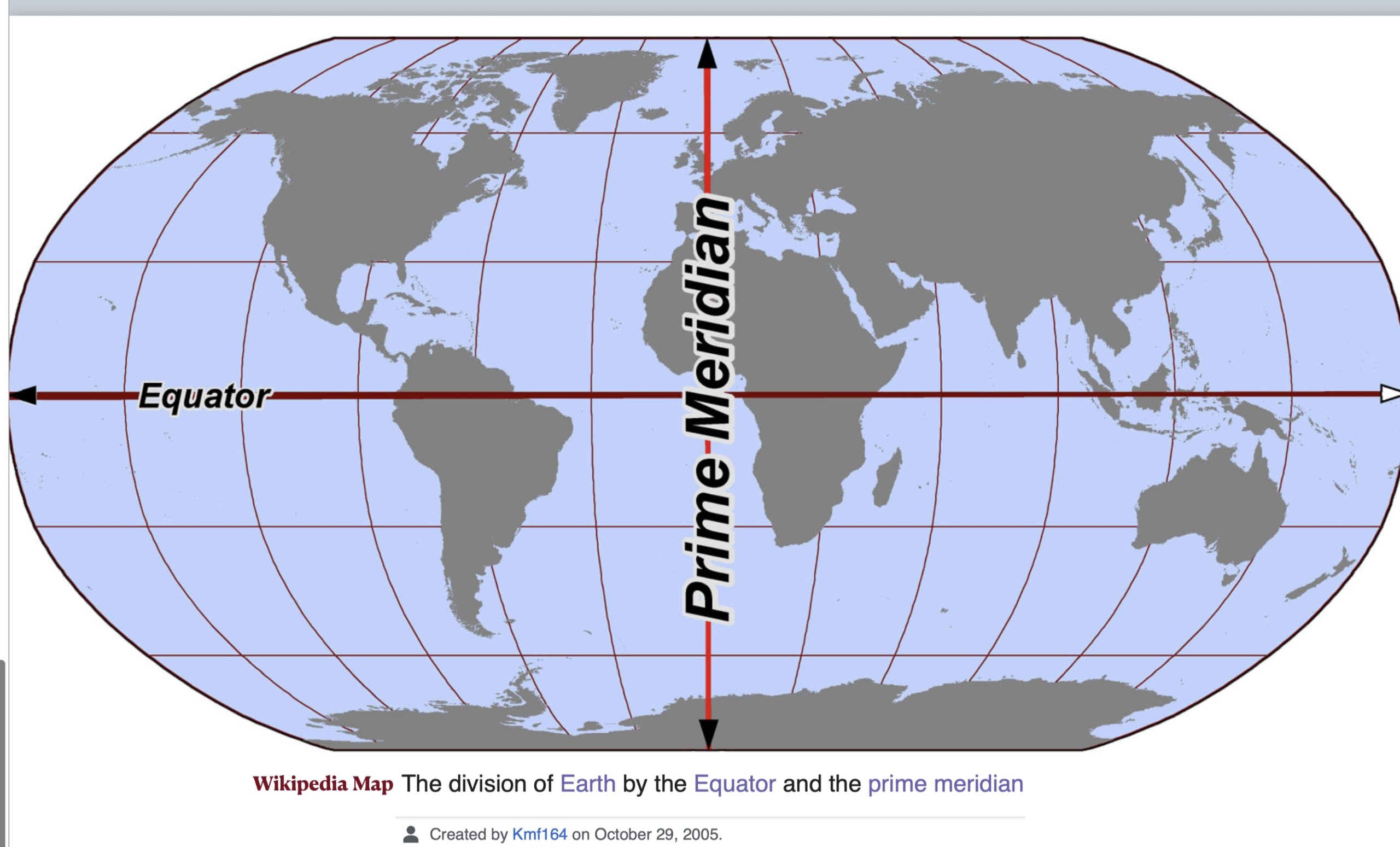
The separation of the eastern and western hemispheres cuts through the poles, perpendicular to the Equator. But such a division can have any orientation and could potentially run through any place on Earth. As a result, people had to agree on a dividing line to separate the “eastern” half of the world from the “western” half. Eventually, a “Prime Meridian,” or base line running from the North Pole to the South Pole, was selected. Owing to the historical influence of British influence and navigation, it passes through the Royal Observatory in Greenwich, England. But this is a poor location for splitting the world, as it puts Ireland, most of Britain, Portugal, most of Spain, and most of western Africa in the Western Hemisphere. But these places are almost never actually regarded as parts of the Western Hemisphere, as it is inconvenient to divide Europe and Africa. The hemispheric dividing line is therefore informally off-set into the Atlantic Ocean. This alterative line, however, inconveniently puts a large part of eastern Russia and New Zealand in the Western Hemisphere. But again, these places are almost never conceptualized as parts of the Western Hemisphere, which is usually restricted to North America and South America. This limited scope means that the Western Hemisphere is smaller than a half-sphere and is therefore not a true hemisphere.
As we will explore in a later chapter, east and west – unlike north and south – are relative rather than absolute directions. If you travel continually to the north, your journey will end at the North Pole, from which all directions point south. If, to the contrary, you travel continually to the west, you will in due course find yourself to the east of where you started and eventually reach that spot – and then you can keep going indefinitely. East and west must therefore be defined from the perspective of a particular place. From the vantage point of Europe, North America is located to the west and thus belongs to the Western Hemisphere. But from the perspective of China, Japan, and Korea, North America is located to the east and could thus be placed in an alternative Eastern Hemisphere. We divide and label these two hemispheres as we do because our system of global division originated in Europe and frames the world from a European perspective.
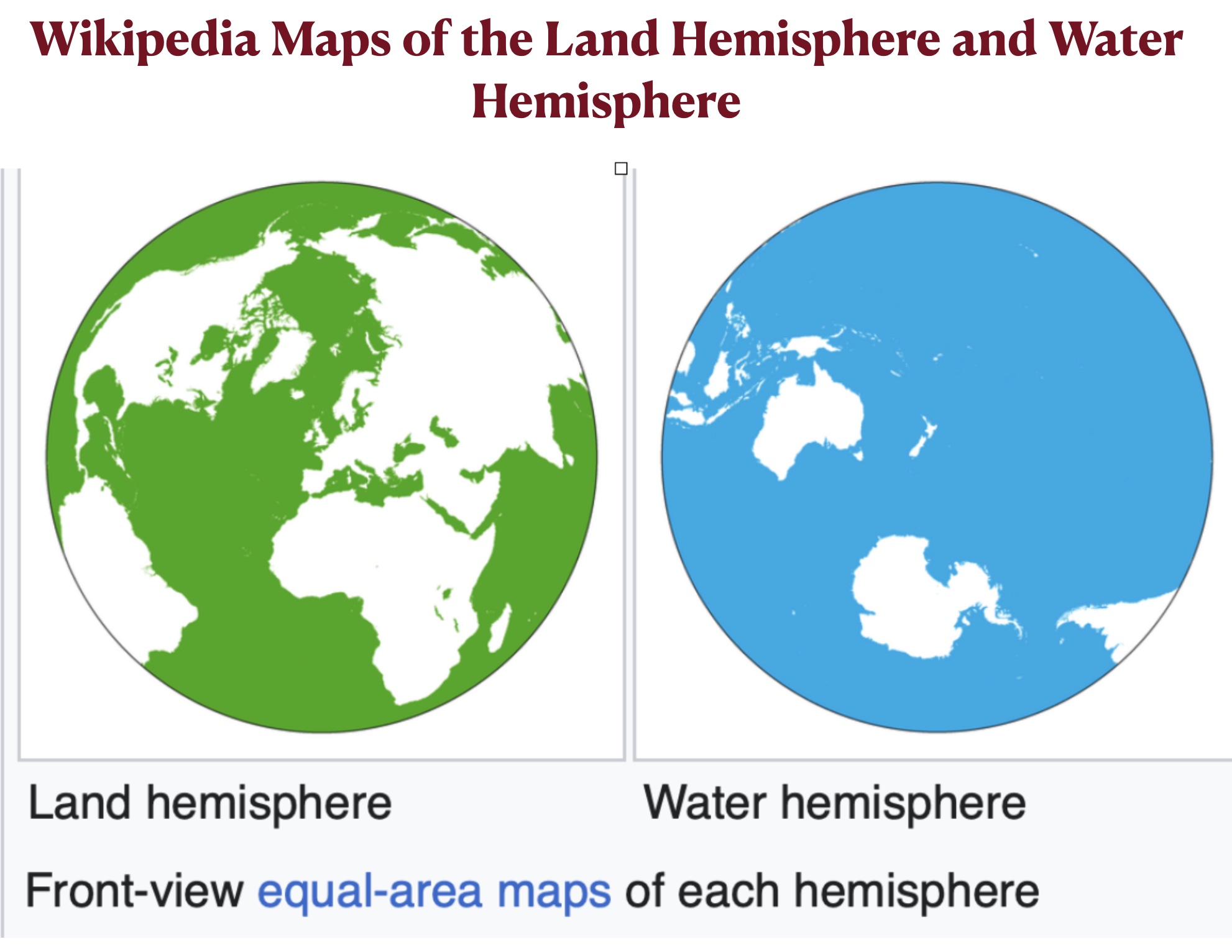
The only other commonly used hemispheric division splits the world so that that most of its land is in one half and most of its water is in the other. The “land hemisphere” is centered in western Europe and the “water hemisphere” is centered in the sea near New Zealand. But even the land hemisphere has more water (53 per cent) than land (47 per cent). Roughly 89 percent of the water hemisphere, in contrast, is oceanic, while six percent is dry land and five percent is covered by the frozen water of the Antarctic ice cap.
[1] These are technically called “terminator-based hemispheres,” as the “terrestrial terminator” is the always-shifting boundary line between the illuminated and dark halves of the Earth.