
(This is the fourth post in a series aimed at helping parents home-school their children.)
One of the first geography lessons for young students should involve spinning a globe to show the Earth’s daily rotation around its axis. For younger children, it might be necessary to explain first the concept of an axis of rotation. This can be effective done by jabbing a pencil through the center of an orange and then twisting it to spin the fruit. If you then pull it out and push it through a different part of the orange, you will have created a new axis. Most globes have a rod that function as the axis, allowing them to be properly rotated. The next step is to explain that this axis passes through, and defines, the north and south poles. The Equator can then be explained as the imaginary line that runs around the Earth’s circumference halfway between the North Pole and the South Pole.
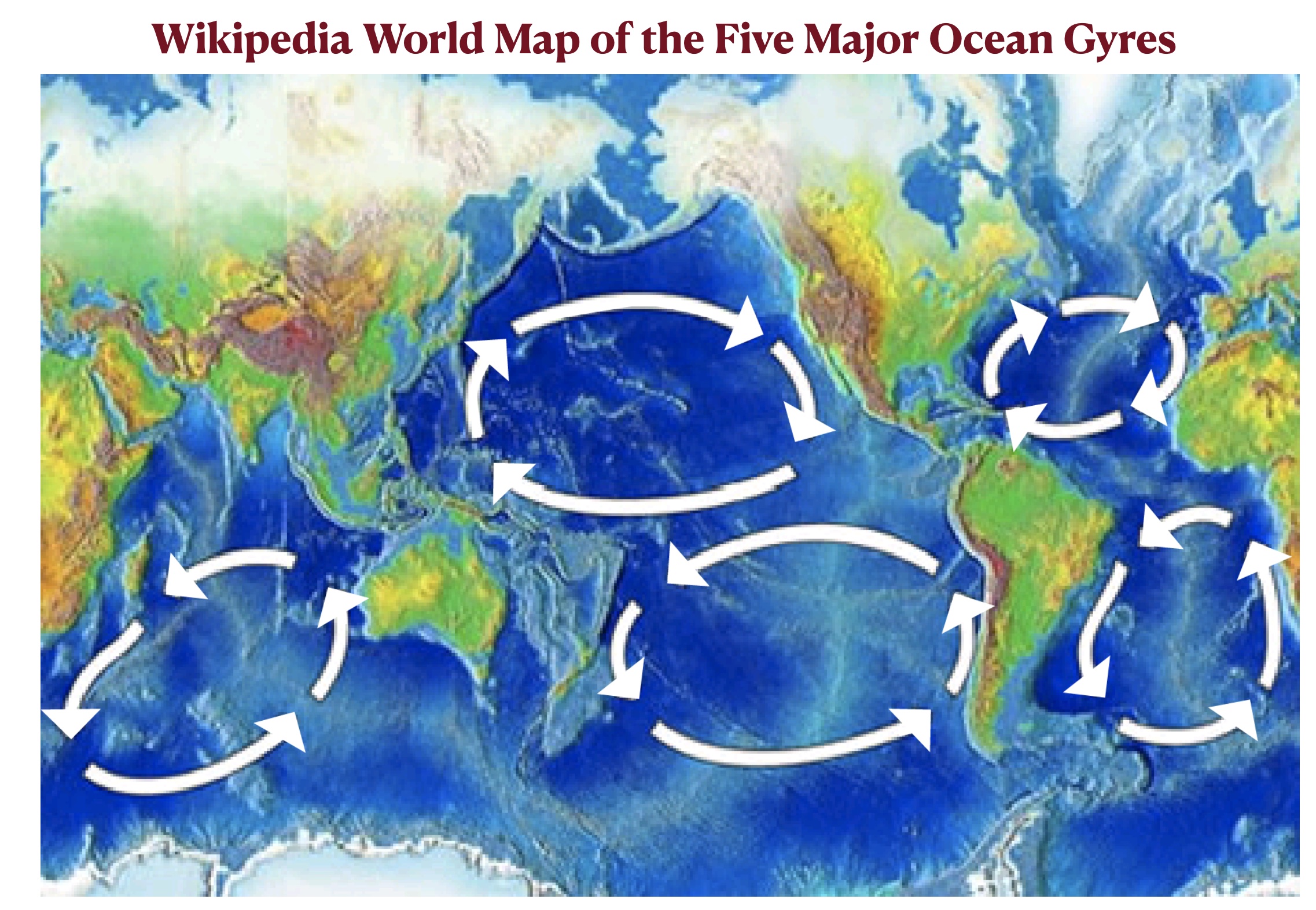
The first step of the demonstration is simply to spin the globe. Make sure to rotate it in the correct direction, which is counterclockwise when looked down on from above. But if you spin the globe in this direction and then lift it up and examine it from below, you will find that it is rotating in a clockwise direction from this perspective. This hemispheric reversal of orientation will become important in later lessons on climate. For example, ocean gyres formed by water currents move in a clockwise direction in the Northern Hemisphere and in a counterclockwise direction in the Southern Hemisphere.
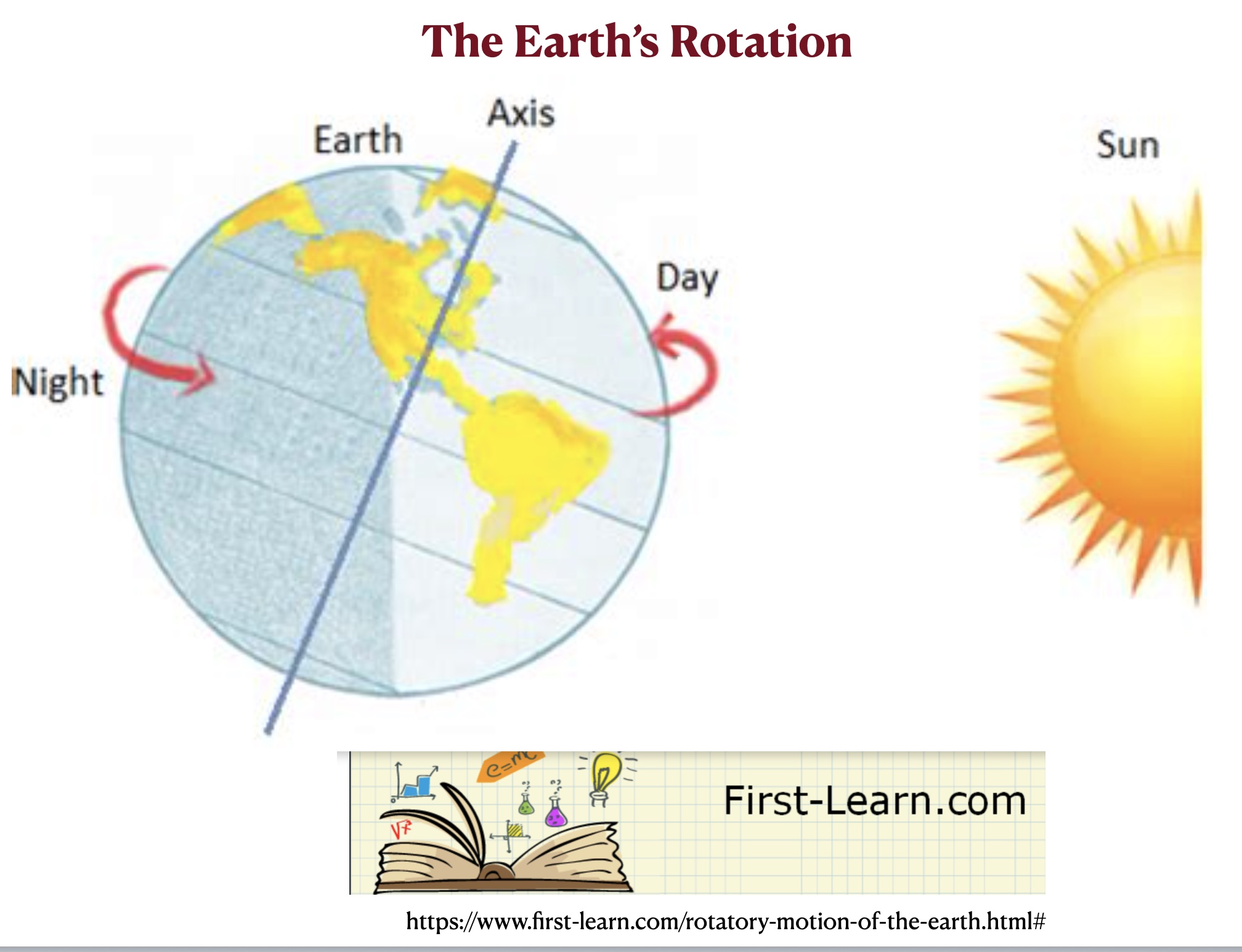
Once these preliminary matters have been explained, it is time to show why we experience day and night. This can most effectively be done in a dark room with a globe and a flashlight serving as the sun. First, mark the student’s hometown with a brightly colored sticker. Then hold the flashlight a few feet away the globe and at the same level. Position the globe so that the top of its axis does not point toward or away from the light but is rather perpendicular to it. This arrangement simulates the situation on the spring and fall equinoxes, around March 20 and September 22. On these two days, the time-periods of “night” and “day” are of equal length everywhere in the world except the poles [1]. Later lessons will show why the daylight period is shorter in the winter and longer in the summer.
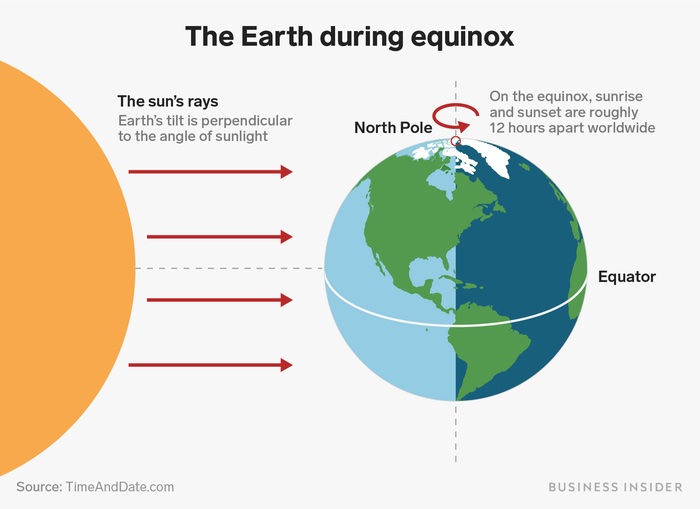
As the demonstration gets underway, the home-marker should on the side of the globe opposite from the flashlight and therefore in the dark. As the globe is slowly rotated, it will soon come into view, at first just barely visible on the left side of the globe. At this point the light begins to hit the marker at the edge of the globe, signifying sunrise in the student’s hometown. A quarter turn later, the home-marker will be directly in front of the light, signifying noon. After another quarter turn it will reach the edge of the light before disappearing, signifying sundown. Students should also be able to see that every place on Earth, except the north and south poles, will be on the illuminated side of the globe for the same amount of time that they are on the dark side.
This demonstration might seem to convey obvious information, but I do think that it is useful for younger students. The next issue, however, is not so obvious: the speed of the Earth’s rotation. You can begin by asking your students to estimate how fast they would be moving due to this rotation if they were standing on the Equator and if they were standing on the North Pole. At the Equator, they would travel the length of the Earth’s circumference in one day. Because the Earth is roughly 25,000 miles around and the day has 24 hours, they will be moving at more than a thousand miles an hour [2]. If standing on the North Pole, however, a person would be rotating, turning around one time over the course of the day, but not moving through space. The closer you are to the Equator, the faster your speed. Bozeman, Montana, roughly halfway between the North Pole and the Equator, is still zipping along at approximately 735 miles an hour.
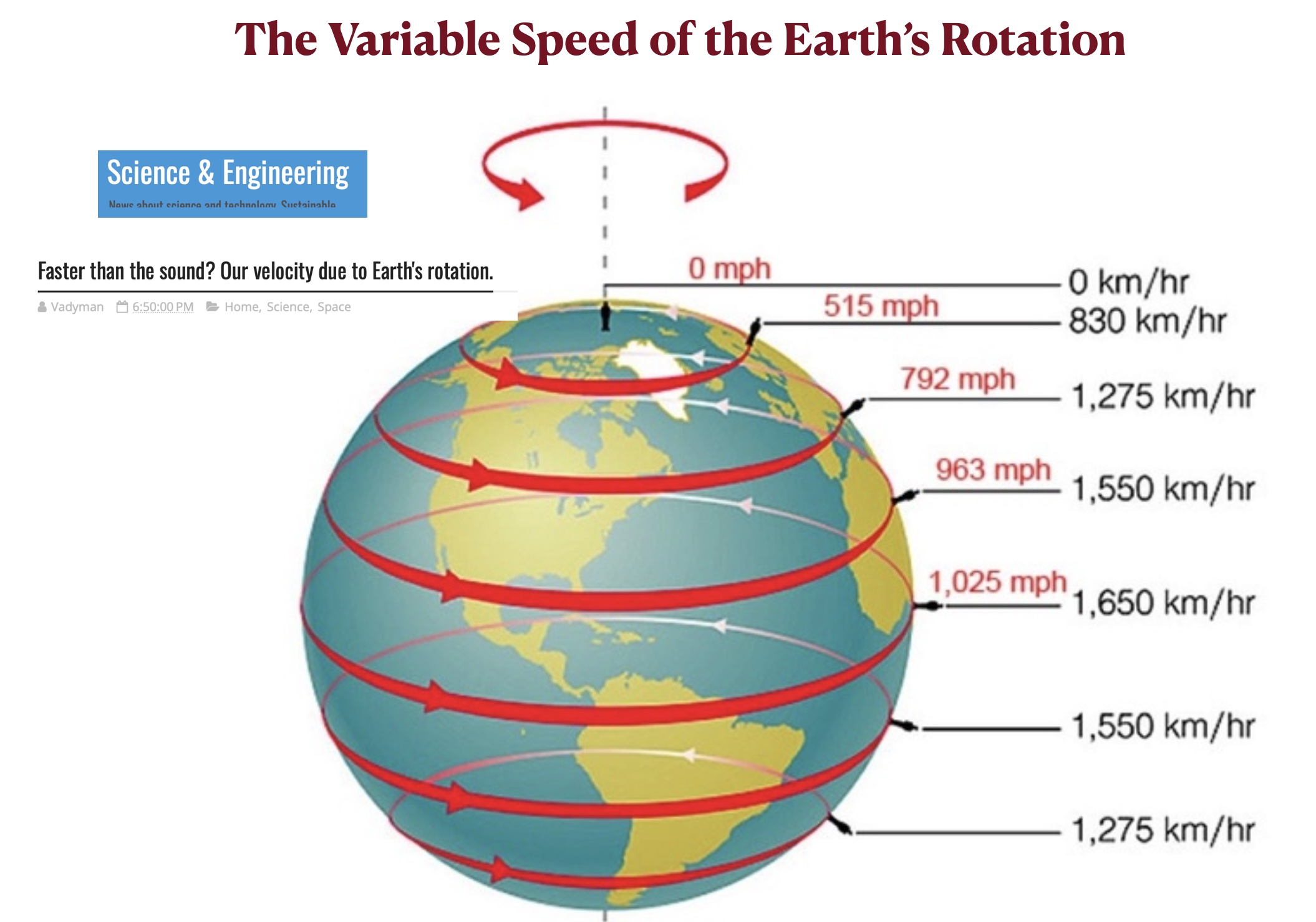
Children will probably be surprised by this speed of movement, as it is not experienced. But because everything moves with the Earth – the oceans, the air, the ground and everything on it – nothing seems to be moving. The motion is also constant and smooth. Even if you are in a car or airplane traveling smoothly in one direction at a constant speed, it does not feel like you are moving. You can reinforce this point by mentioning that the Earth is moving even more quickly in different ways. It orbits the sun, for example, at 66,660 miles per hour, while the entire solar system orbits the galactic center at around 514,000 miles per hour.
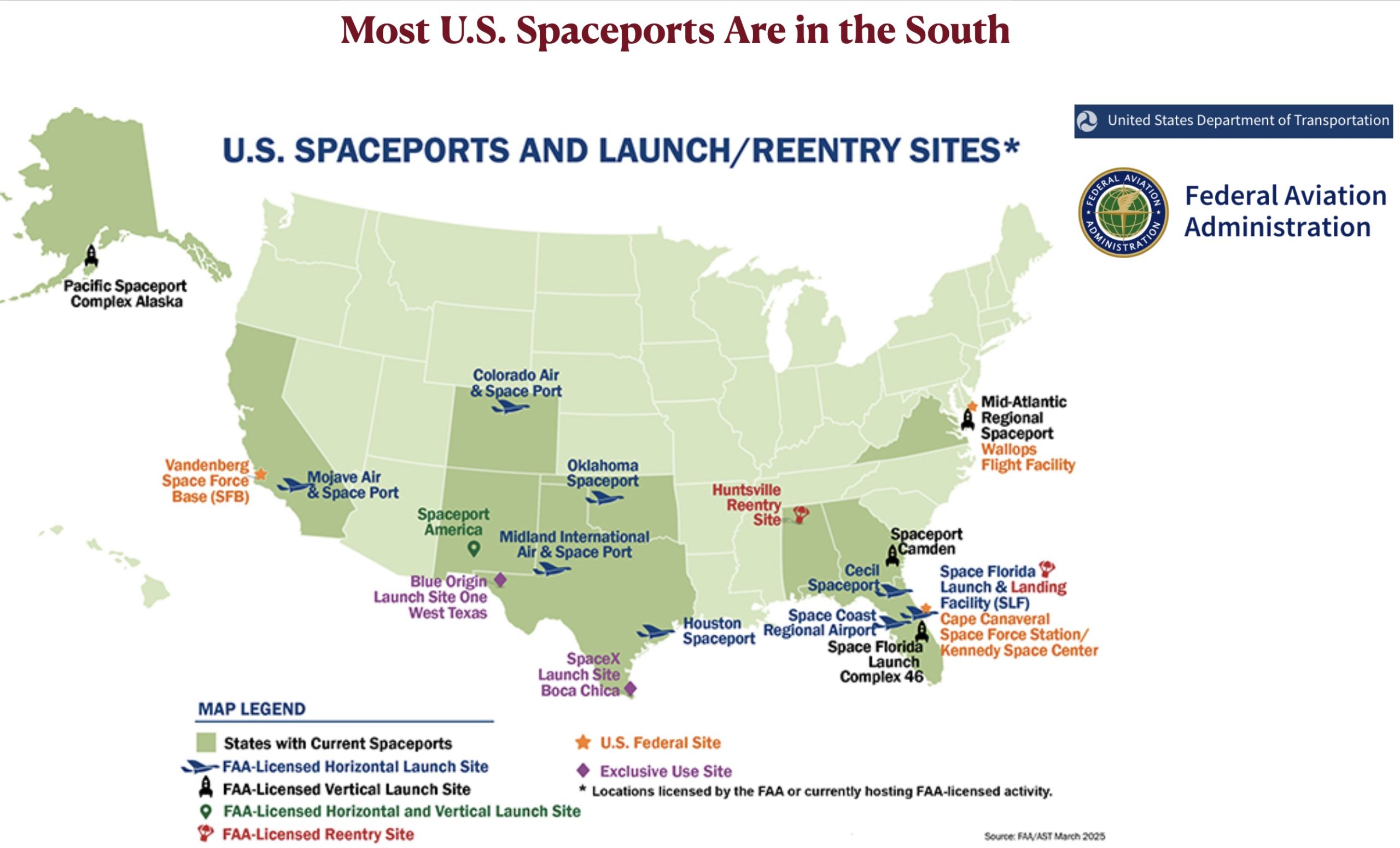
Students might want to know if it makes any practical difference that the Earth’s rotational speed varies from over a thousand mph at the equator to 0 at the poles. The answer is “yes,” most prominently seen in the location of sites used for sending rockets into space. Rockets must reach a certain speed to escape the Earth’s gravity. The closer they are to the Equator, the faster they are already moving when their engines are ignited. As a result, it would take 13 to 20 percent more energy to launch a rocket into orbit at the North Pole than at the Equator. Because of this difference, most U.S. space ports are in Florida, southern Texas, and other locations in the south.
[1]. At the north and south poles on the equinoxes, the sun will form a semicircle just above the horizon and will circle around the pole over the course of the day. This phenomenon will be further explained later. It can be observed in this demonstration, however, as the poles will remain just at the edge of the illuminated half of the globe throughout its rotation.
[2] At the equator, the rotational speed is about 1,040 mph, or 1,670 km/h.